
Math belongs in the article
Build-time equations, numbered references, captioned figures, and tables. Real text and MathML, with a static reading experience.
Loading page…
Skip to content
Open source · Beta
Write in Markdown. Publish a readable article, add a working experiment, and take the same document to a research manuscript.
The example is compiled by Publisle.
Markdown → published article
The transform in Equation 1 turns samples into a spectrum.
| Frequency bin | Magnitude |
|---|---|
| 2 | 4 |
| 6 | 4 |
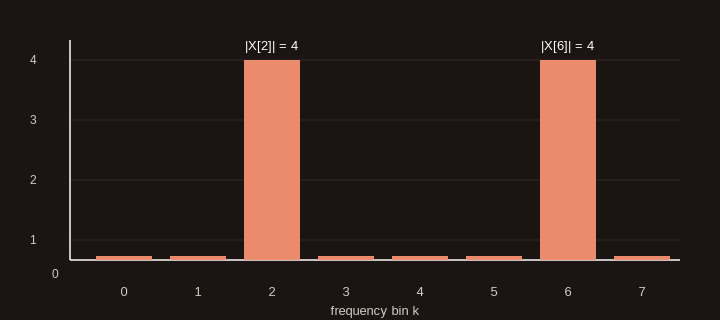
A signal becomes two clear peaks.
## Small signals, clear results

The transform in Equation :ref[eq\:signal] turns samples into a spectrum.

:::equation{label="eq:signal"}
$$
X_k=\sum_{n=0}^{N-1} x_n e^{-2\pi i kn/N}
$$
:::

| Frequency bin | Magnitude |
| --- | --- |
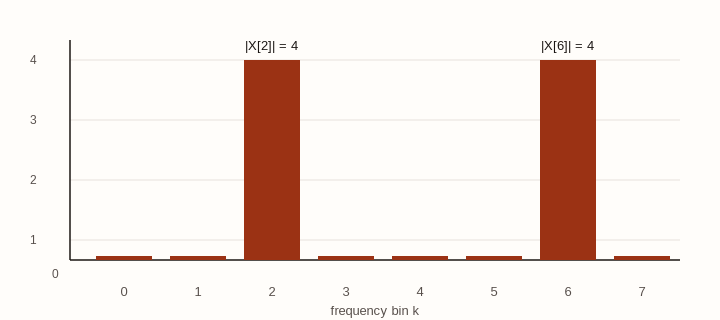
| 2 | 4 |
| 6 | 4 |

::::figure{src="/fft-spectrum.svg" variant-dark="/fft-spectrum-dark.svg" label="fig:spectrum" alt="Eight frequency bins with magnitude four at bins two and six"}
:::caption
A signal becomes two clear peaks.
:::
::::
Readers get the article first. The experiment starts when they choose to explore. Your content stays readable without JavaScript.
For scholarly work, the same structured content carries its equations, references, figures, and bibliography into print.
An explanation you can explore
Follow the same signal from time to frequency. Each step combines pairs of samples; the result is a spectrum with energy in just two bins.
Measured performance
Publisle compiles the document before it reaches your reader. Here is the same math-heavy document through popular publishing tools. Reader delivery is measured separately, with static hosts and default documentation themes identified.
| Tool | Math compilation · median | Reader JS | Installed tools |
|---|---|---|---|
| PublisleMinimal static HTML host, one article | 11.29 msHTML · warm process | 0 B | 10.8 MiB |
| MDXMinimal static HTML host, one article | 46.35 msHTML · warm process | 0 B | 13.8 MiB |
| VitePressDefault documentation theme, one article | 60.22 msHTML · warm process | 56.8 KiB | 144.2 MiB |
| DocusaurusDefault documentation theme, one article | 42.94 msMDX module · warm process | 171.2 KiB | 163.3 MiB |
| PandocMinimal static HTML host, one article | 24.66 msHTML · fresh process | 0 B | 157.8 MiB |
MDX and Pandoc can also publish static HTML without reader JavaScript. Docusaurus compilation here produces a module; its default site theme and VitePress include navigation and framework code. JavaScript compilers are warm; Pandoc includes process startup. Prose and large-document results are in the full report.
Build-time equations, numbered references, captioned figures, and tables. Real text and MathML, with a static reading experience.
Give readers a working experiment. Load each interactive island when it is needed, with an authored explanation available before activation.
Export a research manuscript to LaTeX, JATS, or PDF, with IEEE, ACM, Elsevier, and Springer starter templates.
Install the CLI and compile a document into a static reader page:
npm install -g @publisle/cli
publisle validate article.md
publisle build article.md --out dist/
Journal exports (PDF, LaTeX, JATS) live in the optional research profile: npm install -g @publisle/cli-research. See the journal export guide.
Or compile in-process with the Astro adapter:
import { publisleLoader } from "@publisle/adapter-astro";

export const collections = {
  articles: defineCollection({
    loader: publisleLoader(
      { local: "./article.json" },
      { registry: createRegistry(coreBlockDefinitions) },
    ),
  }),
};Independently versioned under the @publisle npm scope. Core adopters never install research tooling.
Document model, validation, static compilation
Markdown import and export codecs
Portable document schema and diagnostics
Astro content loader and article renderer
Svelte article components and runtime
Build, validate, and export from the terminal